Best IPTV Lifetime Subscription: What 'Lifetime' Means

The best IPTV lifetime subscription is the one you can still use in three years, and the word 'lifetime' is the part of the offer that carries no obligation to deliver it. A one-time payment has to fund a recurring cost — playlist repair, guide refreshes, transit capacity — and nothing in the transaction requires the seller to keep paying it. Before buying one, divide the lifetime price by the provider's own monthly price to see how many months it has to survive, check that you are given standard M3U or Xtream credentials so the setup outlives the seller, and pay by a method that leaves you a dispute route. We do not sell one, and this page explains why.
The best IPTV lifetime subscription is the one that still works in three years — and 'lifetime' is the single specification on the offer that nobody has to stand behind.
Every other claim on a sales page can at least be measured. Bitrate is in the player's readout. Channel count is in the playlist file. Frame rate is in the transport stream header. The term of the subscription is the one number in the transaction that only resolves after you have paid, and it resolves to whatever the seller's infrastructure lasts.
So this page is not a ranked list of lifetime offers. It is what the word covers, the recurring costs a one-time payment has to fund, what the purchase does to your dispute route, and the arithmetic to run before you decide. The general question of which provider to buy from — credentials, trials, bitrates, stream limits — is worked through in the seven checks to run before you pay any provider. This one stays on the term.

What a lifetime IPTV subscription actually is
A lifetime IPTV subscription is a single up-front payment in place of a recurring one, sold as permanent access to a live channel list and an on-demand library.
That is the entire definition, and it is worth reading twice, because it describes a payment schedule rather than a service level. Nothing in it says how many channels, at what bitrate, from which source regions, or for how long. Those are separate specifications that a lifetime offer carries in exactly the same way a monthly one does.
Three things the term is doing at once on most listings:
- A discount frame. The price is presented against the cost of several years of monthly billing, so the comparison is savings rather than risk.
- A commitment device. Once paid, you stop evaluating. That is the point of it from the seller's side, and it is worth naming.
- An unfalsifiable promise. 'Lifetime' cannot be checked during a trial, at nine on a Saturday, or in any player readout. It can only be checked retrospectively, by the service continuing to exist.
The last one is why this page exists: every other check in this category has a measurement behind it, and this one has to be reasoned about from the cost side instead.

The arithmetic a one-time payment has to survive
Here's the short version: a subscription is not a product you buy once, it is a cost that recurs whether or not you keep paying, and a lifetime fee is a bet that one payment covers all of it.
The recurring side of this service, in the operational figures we actually publish:
| What has to keep happening | How often | Why it costs money |
|---|---|---|
| Stream repair and source swaps | 45–70 streams per week | Upstream feeds move or die; each one is manual work |
| Electronic Programme Guide refresh | every 4 hours | Guide data is licensed, fetched and mapped continuously |
| Integrity probes on secondary relays | daily, dropping 2.4% of them | A relay that has quietly failed is worse than a missing one |
| Transit and delivery capacity | continuously, per stream | 8.6 Mbps for a 1080p 50 FPS feed, 19.5 Mbps for 4K |
None of those stop when the payments do. A curated playlist of 5,120 live channels across 16 broadcast source regions is a maintenance schedule, not an asset — leave it alone for a quarter and the 45–70 weekly repairs turn into a channel list that mostly does not resolve.
So the question to hold a lifetime offer against is not "can they afford to sell it at this price". It is "what funds the fourth year". There are only three honest answers: the seller is pricing on the assumption that most buyers stop watching, the seller is planning to sell new lifetime subscriptions to fund the old ones, or the seller is not planning on a fourth year at all.
That is a structural point about one-time pricing against a recurring cost, not an accusation aimed at anybody selling one.

Whose lifetime is it: yours, the panel's, or the domain's
Ask a provider what 'lifetime' is the lifetime of, and the answer separates three quite different products that all use the same word.
- Your lifetime. What buyers assume they are getting. Almost nobody writes it down, because no service in this category can underwrite it.
- The service's lifetime. The account works as long as the platform exists. This is the honest version, and it is a much shorter promise than it sounds.
- The panel's or the app's lifetime. Common with resellers, who sell access on infrastructure they do not own. When the upstream panel restructures or the branded application stops being updated, the reseller's obligation ends with it, and the reseller is usually the party you have no contract with.
The term is defined by the party that gets to stop answering email.
One case from our support logs. A subscriber bought a €60 one-year plan from an unlisted reseller whose listing advertised 70,000 channels and permanent access. Permanent turned out to mean six reliable weeks, then constant stuttering through mid-season European fixtures, then nothing at all in week seven, when the reseller's upstream domain was abandoned. The listing's word for the term had no bearing on how long the infrastructure behind it lasted, because nothing in the arrangement required it to.
That was sold as an annual plan rather than a lifetime one, which makes it the mild version of the same failure — twelve months of exposure instead of an open-ended one. The payment side of that case, and the billing-term argument in its general form, are in the buying guide linked at the top of this page rather than repeated here.
What to ask, in these words: what happens to my access if you change upstream providers, and what happens to it if you stop trading. A provider that will answer the first question and not the second has told you which lifetime is on sale.
What a lifetime purchase does to your recourse
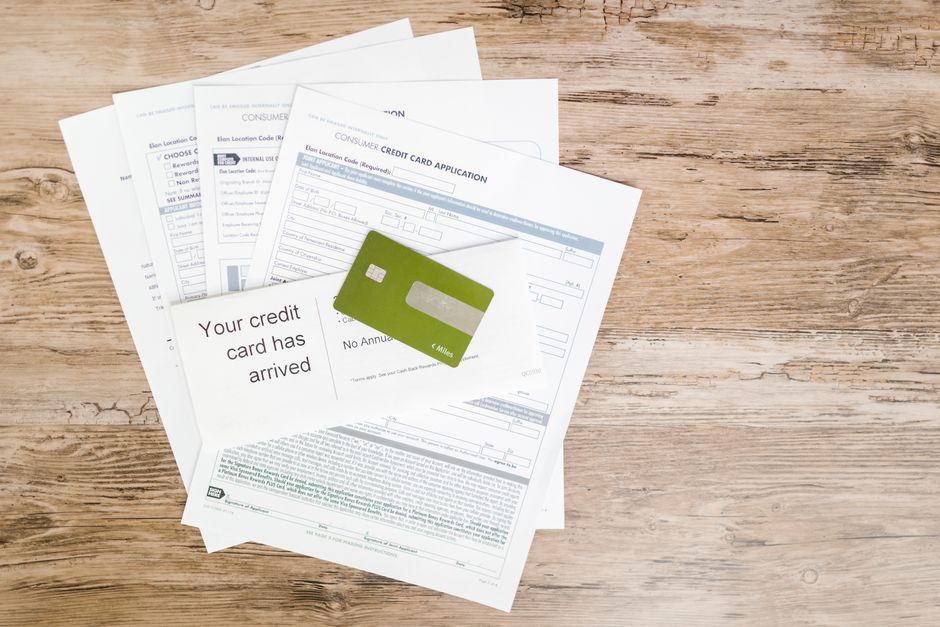
This is the part that is genuinely asymmetric, and it is arithmetic rather than opinion: the term you are buying is measured in years, and the window in which you can dispute the payment is measured in days.
In the United States, the CFPB's guidance on disputing a card charge puts the written billing-error notice at 60 calendar days after the charge appeared on your statement. Card scheme rules and other jurisdictions set their own windows and they differ — but none of them are open-ended, and every one of them closes long before the fourth year of a lifetime subscription.
What that means in practice:
- A service that fails in month two is inside most dispute windows. You have a route.
- A service that fails in month fourteen is outside all of them. The payment is final regardless of what was advertised.
- A payment made through a gift-card gateway or an unverified third-party processor was never inside any window at all, because there is nothing for a bank to act on.
The refund policy on the sales page is a separate thing from the dispute window, and it is usually the weaker of the two. The evaluation window here is 24 hours and the refund request rate inside it is 2.9% — a figure worth asking any provider for, because a service that cannot tell you its refund rate is not measuring one. A refund policy on a lifetime plan is worth reading closely for what it does not say: almost all of them cover the first few days, and none of them cover year three.
So the honest framing of a lifetime purchase is that you are converting a recoverable payment into an unrecoverable one in exchange for a discount. That can still be a reasonable trade. It is just not the trade the sales page is describing.
The specification claims that arrive with lifetime pricing
Lifetime offers tend to arrive attached to the largest technical claims in the category, and the two things are connected: a number nobody can check keeps company with other numbers nobody can check.
Channel counts. An uncurated playlist of 60,000 or more channels, loaded onto an entry-level streaming stick with 1 GB of memory, produces a 74% out-of-memory crash rate within sixty seconds. The same hardware parsing a curated 5,120 channel list crashes 1.1% of the time. The playlist is a text file the player holds in memory and indexes before it draws a single row of the guide, so past a point its length is a hardware problem rather than a feature.
Resolution labels. A stream can report 3840x2160 to your player while carrying a fraction of the data a 4K frame needs, because a lower-resolution relay has been pushed through a hardware scaler and rebroadcast at inflated dimensions. The frame size is real and the detail is not. Reading a codec readout to catch an upscaled feed is a four-minute check, and it is the one to run on any lifetime tier advertising 4K or 8K. The vocabulary in that readout comes from broadcast transport standards, and the DVB specifications are where those terms originate.
Bandwidth claims. Delivery capacity is the cost that scales with quality, not with catalogue size: 25 Mbps sustained per 1080p 50 FPS stream and 50 Mbps per 4K stream, counted per simultaneous stream rather than per household. Those sit above the FCC's published broadband speed guide, which puts HD at 5–10 Mbps and 4K at 25+ Mbps, and the gap is frame rate and live delivery. A catalogue claim costs a seller nothing to print. The capacity to serve it is what recurs, and it is what a one-time payment has to keep funding.
None of this makes a large channel count or a 4K tier dishonest on its own. It makes them unverified, and a lifetime price removes the mechanism — cancelling next month — by which you would otherwise register a complaint.

Break-even is the wrong calculation
The standard case for a lifetime subscription is a break-even sum: divide the one-time price by the monthly price, and everything past that month is free. The sum is correct. It is also answering a question nobody is asking.
Run it anyway, with the provider's own figures rather than anyone else's. Take the lifetime price, divide by that provider's monthly price, and you have the number of months the service has to keep working for you to be level. Lifetime offers in this category are usually priced somewhere between one and three years of monthly billing, so the answer is typically somewhere between 12 and 36 months. Write that number down, because it is the actual product: not permanent access, but a bet that this seller is still delivering in month 24 or month 36.
Now the part the sum leaves out. Median subscriber retention here is 6.8 months. That is our own figure, across a service with published bitrates, standard credentials and monthly billing, and it is the ordinary shape of this category rather than a failing — people's viewing changes, a season ends, a household moves. So the median buyer of any subscription in this market stops watching well before the twelfth month, and a break-even at month 24 assumes a viewing habit that half of all subscribers do not have.
That cuts in an uncomfortable direction for everyone selling anything long-term, us included. Long-dated plans are profitable primarily because of the months that are paid for and not used. A lifetime plan is the limit case of that, and it is why the sums always look good on the page.
The useful version of the calculation: work out what the same money buys in monthly billing at the same provider, and ask whether you would confidently pay that provider on the last month of the run. If the answer is no, the discount is not for you — it is compensation for risk you are being asked to take.

Standard credentials are the only part that survives a provider
Whatever else you buy, buy portability. If a service issues standard M3U or Xtream Codes credentials, the setup you build — player, buffer settings, favourites, decoder assignment — survives a change of provider. If it does not, everything except the picture is gone the day the service is.
Independent players parse a playlist and switch channel in an average of 1.3 seconds, against 3.8 seconds on rebranded web-wrapper applications, while giving you control over buffer length, audio passthrough and decoder selection. A provider that refuses to issue standard credentials, and insists on its own application, is generally hiding unstable source infrastructure or preventing subscribers from switching. On a monthly plan that is an annoyance you can leave behind at the end of the month. On a lifetime plan it is the whole exit route, sold away in advance.
The limit: a single provider-supplied application is a genuinely easier start for anyone who does not want to configure a playlist URL, an EPG time offset or a decoder assignment. Plenty of subscribers reasonably want that, and 21% of connections here come from smart TV native apps rather than dedicated clients. It is a fair trade on a plan you can cancel. It is a much worse one on a plan you cannot.

How to evaluate a lifetime offer if you are buying one anyway
People do buy these, and some of them are fine. If that is the decision, this is the order that surfaces the most information for the least money.
- Buy the monthly plan first, for one month. Every technical check worth running needs a live account, and a monthly plan is the cheapest possible way to get one. A seller who will not sell you a single month before a lifetime plan has told you something.
- Run the checks during that month, at peak. Codec readout on a live sports channel, the same channel at 21:00 on a Saturday, two streams at once if you are buying for more than one room. Time to first frame here is 1.4 seconds on MPEG-TS and 2.8 seconds on standard HLS manifests, which are the figures to hold a trial against.
- Ask the two term questions in writing. What happens to access on an upstream change, and what happens if trading stops. Keep the reply.
- Check the credentials are standard before the larger payment, not after.
- Pay by a method with a dispute route. A card or a recognised processor. Not a gift-card gateway.
- Then decide, with the break-even number in front of you — against a service you have now actually measured.
If the picture degrades during that month, work out whose fault it is before you conclude the service is dying: the five-minute test that separates your line from the provider's will tell you, and 58% of weekend match-day support tickets here trace to ISP transit peering congestion rather than to anything at the server end.

Why there is no lifetime plan on this site
We do not sell one, and the reason is the arithmetic in the second section rather than a principle about pricing.
45–70 streams get repaired or source-swapped every week here, the guide refreshes every 4 hours, and 2.4% of secondary relays are dropped during daily integrity probes because they had quietly failed. Every one of those is a cost that arrives again next week, and a payment that arrived once in 2023 does not cover the week after next. We would be funding your fourth year out of somebody else's first, which is a structure with a known ending.
The plans, stream limits and billing terms we do sell are monthly and quarterly instead. Quarterly is the most balanced position we can defend: long enough that the setup is worth doing, short enough that a bad month costs you a month. That is a less attractive offer than a lifetime one and we would rather write down why than compete on a term we cannot underwrite.

Where a lifetime subscription is the wrong purchase
Four situations where the honest answer is not to buy one — and note that the fourth applies to this service as much as any other.
- You have not tested the service on your own line. A lifetime price paid before a single peak-hour measurement is a bet on a service you have not measured. One month first, always.
- The payment route has no dispute mechanism. Gift-card gateways and unverified third-party processors leave no recourse at any point in the term, and the term is the whole risk.
- You are buying access through a reseller rather than the operator. The obligation ends with an upstream arrangement you cannot see and are not party to, and a lifetime term makes that exposure permanent instead of monthly.
- You want a guarantee that the service is still there in five years. Nobody selling internet-routed video can give you that, and a provider that puts the word 'lifetime' on it has not given it either — it has priced it. Cable can make long-term promises because it owns the wire.
And the limit on all of the above: a direct operator with transparent infrastructure, standard credentials, a support line that answers and a track record you can check is a genuinely different risk profile from an anonymous reseller panel. It is still not a lifetime. It is just a shorter list of ways the term ends.
What to read before you commit to a term.
- →The wider subscription buying guide — the seven checks that apply to any provider on any term, in the order that rules out the most of them for the least money.
- →Telling real 4K from an upscaled feed — the codec readout check to run on any lifetime tier that advertises 4K, and what 4K really costs in bandwidth.
- →Plans, billing terms and cancellation — what we sell instead of a lifetime plan, with the stream limits and the notice period written out.

Straight answers, marked up for Google.
- What is a lifetime IPTV subscription?
- It is a single up-front payment in place of a recurring one, sold as permanent access to a channel list and an on-demand library. That definition describes a payment schedule rather than a service level — it says nothing about bitrate, channel count, source regions or how long the service will exist. Everything you would check on a monthly plan still has to be checked on a lifetime one.
- How long does a lifetime IPTV subscription actually last?
- For as long as the infrastructure behind it keeps running, which is a much shorter promise than the word suggests. Ask a provider what 'lifetime' is the lifetime of: your account, the platform, or a reseller panel it does not own. Resellers sell access on somebody else's infrastructure, so their obligation ends when the upstream arrangement does, and you have no contract with the party that actually holds it.
- Is a lifetime IPTV subscription worth it?
- It depends on a division you can do yourself: the lifetime price divided by the same provider's monthly price gives the number of months the service has to keep working for you to break even, usually somewhere between 12 and 36. Then weigh that against how long you will actually watch — median subscriber retention here is 6.8 months, and that is on a service with monthly billing and published figures. A lifetime plan is profitable for the same reason it is popular: most of the term goes unused.
- Are lifetime IPTV subscriptions a scam?
- Not inherently, but the pricing model carries a structural problem rather than a moral one. A subscription is a recurring cost — 45–70 stream repairs a week here, a guide refresh every 4 hours, transit capacity per stream — and a one-time payment has to fund all of it indefinitely. Ask what funds the fourth year, because the honest answers are that most buyers stop watching, that new sales fund old ones, or that there is no fourth year planned.
- Can I get a refund if a lifetime IPTV subscription stops working?
- Usually not, because the dispute window closes long before the term does. In the United States the CFPB puts the written billing-error notice at 60 calendar days after the charge appears on your statement, and other jurisdictions set their own limits — none of them are open-ended. A failure in month two is inside most windows and a failure in month fourteen is outside all of them, and a payment made through a gift-card gateway was never inside one at all.
- What should I check before buying a lifetime IPTV subscription?
- Buy one month first and measure the service at peak hours on your own line, then check that you are issued standard M3U or Xtream Codes credentials so your setup survives a change of provider. Ask in writing what happens to access if the provider changes upstream sources and what happens if it stops trading. Pay by card or a recognised processor, and only then run the break-even division.
- Do lifetime IPTV subscriptions really include tens of thousands of channels in 4K?
- Treat both halves of that claim as unverified until someone puts figures against them. An uncurated playlist of 60,000 or more channels crashes an entry-level 1 GB streaming stick 74% of the time within sixty seconds, against 1.1% for a curated 5,120 channel list. A 2160p tag is also just a frame dimension: a lower-resolution relay can be pushed through a scaler and rebroadcast at inflated dimensions, so check the bitrate in the player's codec readout alongside the resolution.
- Does Streamline sell a lifetime IPTV subscription?
- No, and the reason is cost structure rather than policy. Stream repair, guide refreshes, integrity probes and delivery capacity all recur every week, and a payment that arrived once does not fund them — selling lifetime plans would mean funding old subscribers out of new sales. The plans here are monthly and quarterly, and quarterly is the position we think is most defensible: long enough to be worth the setup, short enough that a bad month costs you a month.
These eight questions are also emitted as FAQPage schema in the page head, so search engines can render the answers directly in the results.

Still stuck? Email us.
If you are weighing up a specific lifetime offer and want a second read on it, send the provider's answers to the two term questions, the monthly price alongside the lifetime price, and what a speed test reports at nine in the evening. Those three things decide more than any ranked list will, and the arithmetic works the same whoever you end up buying from.
If you are earlier than that, start with what IPTV is and how it works. If you want the general purchase checks rather than the term-specific ones, the wider buying guide linked above has them in order.